

In my last blog, Groundwork Gaps in my Greenie (Part 3), we focused on improving groundwork with Atticus.
“If the horse is dull on the ground, he’ll be dull under saddle. If he’s worried on the ground, he’ll be worried up there.” Buck Brannaman
In the can-you-believe-it’s-been-four-months that I’ve been riding him, we’ve had quite the chip-away-at-it journey under saddle as well.
Training versus Conditioning
My approach to legging up a new or green horse is that you simply focus on training them to go down the trail in the best possible way to ensure everyone’s safety and soundness, and the conditioning comes as part of the package. A free bonus, if you will.
Over the years, I’ve taught a number of Endurance 101 clinics, and it’s not unusual that new competitors (or heck, even some experienced ones) get focused on the conditioning aspect of the sport. Heart rate recoveries and adding speed and distance and ensuring that their horse is fit enough for its first competition.
I’ve been there myself, long ago, in the 90s, at a time when the music scene was all about grunge, and we were all dialing up to reach the internet through AOL.
But times and technology have evolved, and certain mistakes, like getting a perm every 10 weeks or so, are practices in my rearview mirror.
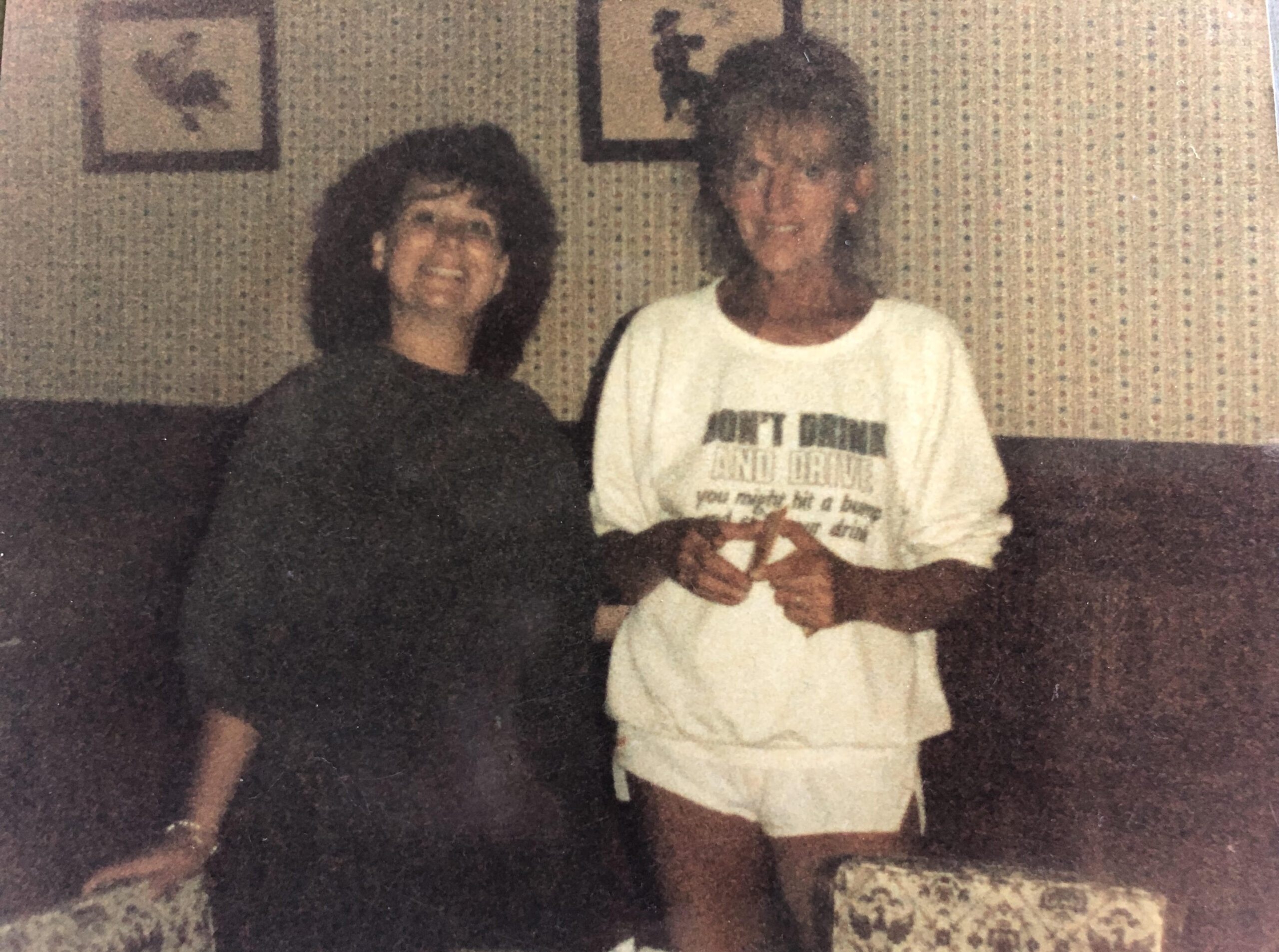
Thank you, Mrs. B, for all the home perms! (Circa 1984)
Likewise, worrying about going fast enough or heart rate recoveries when a horse was not safe to ride, either for himself, or those around him. Or on him.
As Maya Angelou, famously a horse trainer when she was not writing [no, that’s a joke] told us–
“When you know better, do better.”
Training and conditioning are two different things. Training is about the brain of the horse; conditioning is about the body.
For me, LSD (long slow distance) conditioning –the base for all endurance horses– “just happens” while I’m focusing on training the horse.
This started out in the most elementary of ways for Atticus after he arrived from Minnesota in October. Elise would tack up Dunkin –the world’s most questionable equine “chaperone” for good conduct—and I would tack up Atticus, and we’d go for a walk. We would occasionally trot. We would haul out to Hitchcock Woods, go for a walk, climb and descend some hills, jog a few strides, cross a bridge, walk some more.

We are so grateful to have Hitchcock Woods!
Each week we’d go a bit further, maybe a tiny bit faster, add a little challenge here and there. We’d swap out who rode whom.
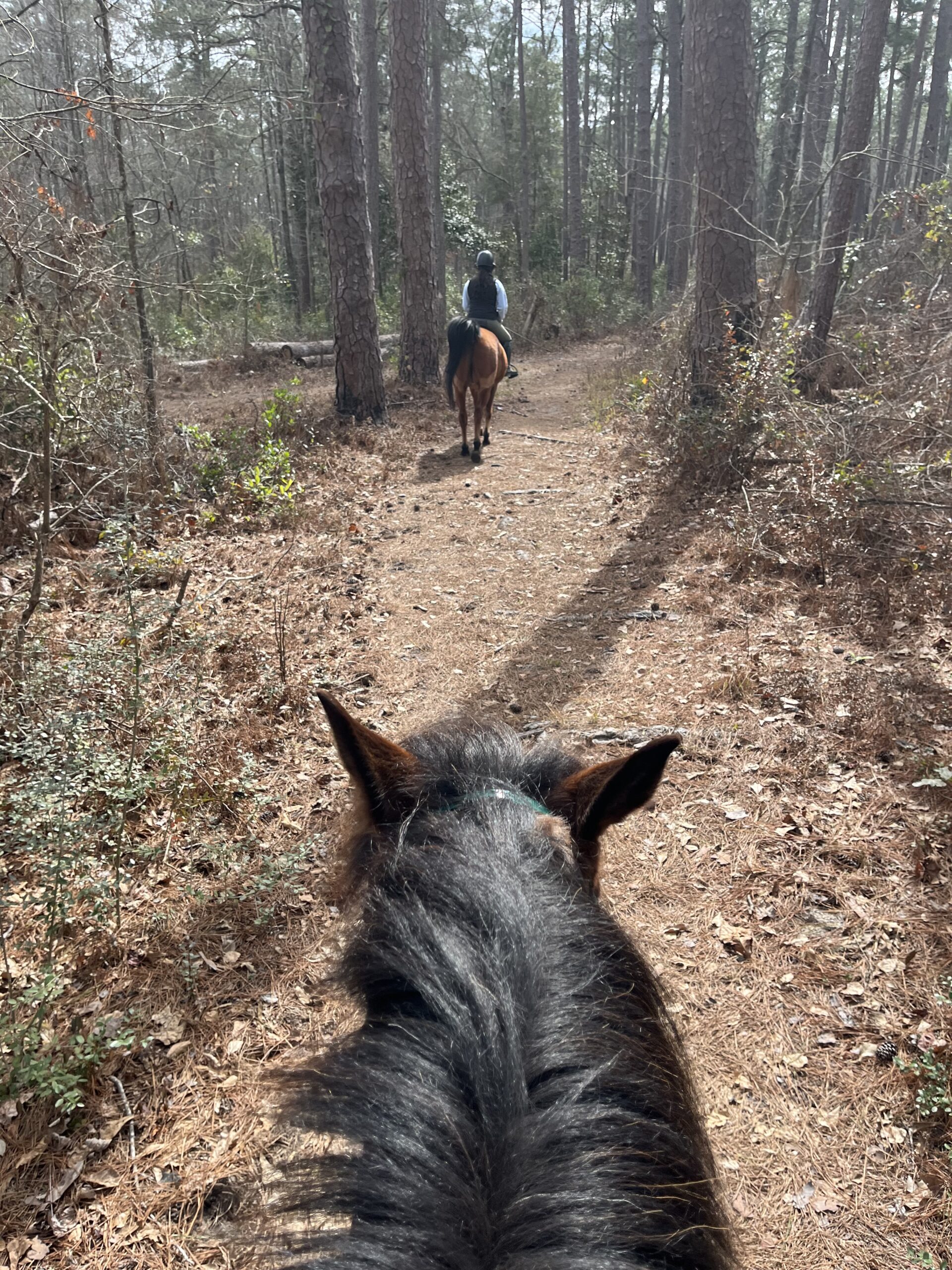
Some days, we are looking for hills, other days for technical trail, other days, just a nice wide lane to trot. Lucky for us, there’s a variety at the Woods.
Dunkin was visibly relieved when I finally announced that we’d done enough walking that we could start picking up the pace a bit. He was tired of hustling to keep up with Atticus’ walk and when it came to trotting, Dunk could motor along without effort, at a significantly faster clip. He deigned to ‘keep it under a hundred’ so his younger brother could keep up.
And rest days. Always mindful of the rest days.

Naps. Lots of naps.
One of my dear friends, Janie Kibble, has a quote on her Facebook page that I have always loved—
“Heaven is a place where nothing ever happens.”
Frankly, that’s what LSD and conditioning a green horse should look like, at least superficially.
Like Watching Paint Dry – or is it?
But each of those little rides had a million things going on.
Atticus, on one of our first off-property rides, distracted by hearing a whole bus full of elementary school kids – some distance away through the trees — out on a field trip at the Woods. Hearing them, but not seeing them, something new for a horse from Minnesota, flat and open, where you ‘can watch your dog run away for three days.’
Getting very tense, very big, leaving me questioning whether he would stop if he were to spook and scoot. Teaching him that it was AOK to simply stop and stay with me until he could see all the kids, then walk past them, still big and tense, but also learning that this turns out okay. That staying with me is safe. That I’ll protect him from the scary stuff.
Adding pennies to the jar.
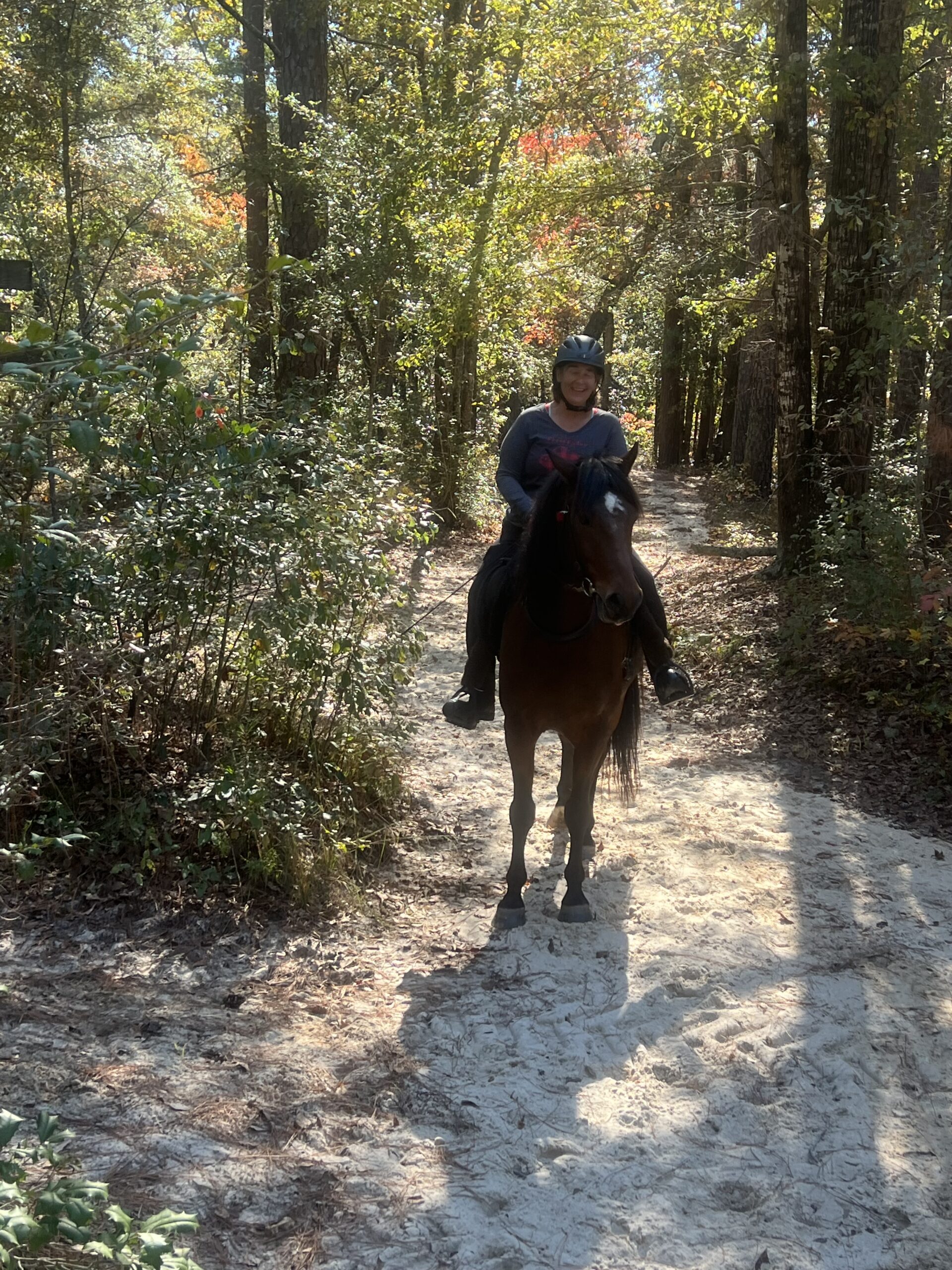
Did you see the size of the teeth on that squirrel, Mom?
You can be a leader without being intimidating. The horse can be your partner without being your slave. I’m trying to keep the best part of the horse in there. I’m not trying to take anything away from him.” (Buck Brannaman)
Getting out of balance, stumbling, figuring out how to place his feet on tricky footing, how to use his body and his legs in a way that they’d get stronger and better at carrying him efficiently.
When Atticus wasn’t sure of the answer to a question, or when it seemed he was sure he had a better answer, like a different trail to take at an intersection, he can get decidedly heavy and bracing. These are what I call “Mack Truck” moments. This led to some pulling that I am not proud of, so would require me finding better questions to ask.
Taking pennies from the jar.
At some point, Elise had shared a little Facebook video of someone relying on their inside rein without supporting it with the outside rein, and I had one of those embarrassing head smacking moments of “who, me?” Yes, me. It turned out the Mack Truck moments were briefer, and more quickly resolved when I focused on using the outside rein as the boundary.
Oh look, this horse is so much smarter than we knew! <smacking my own head>
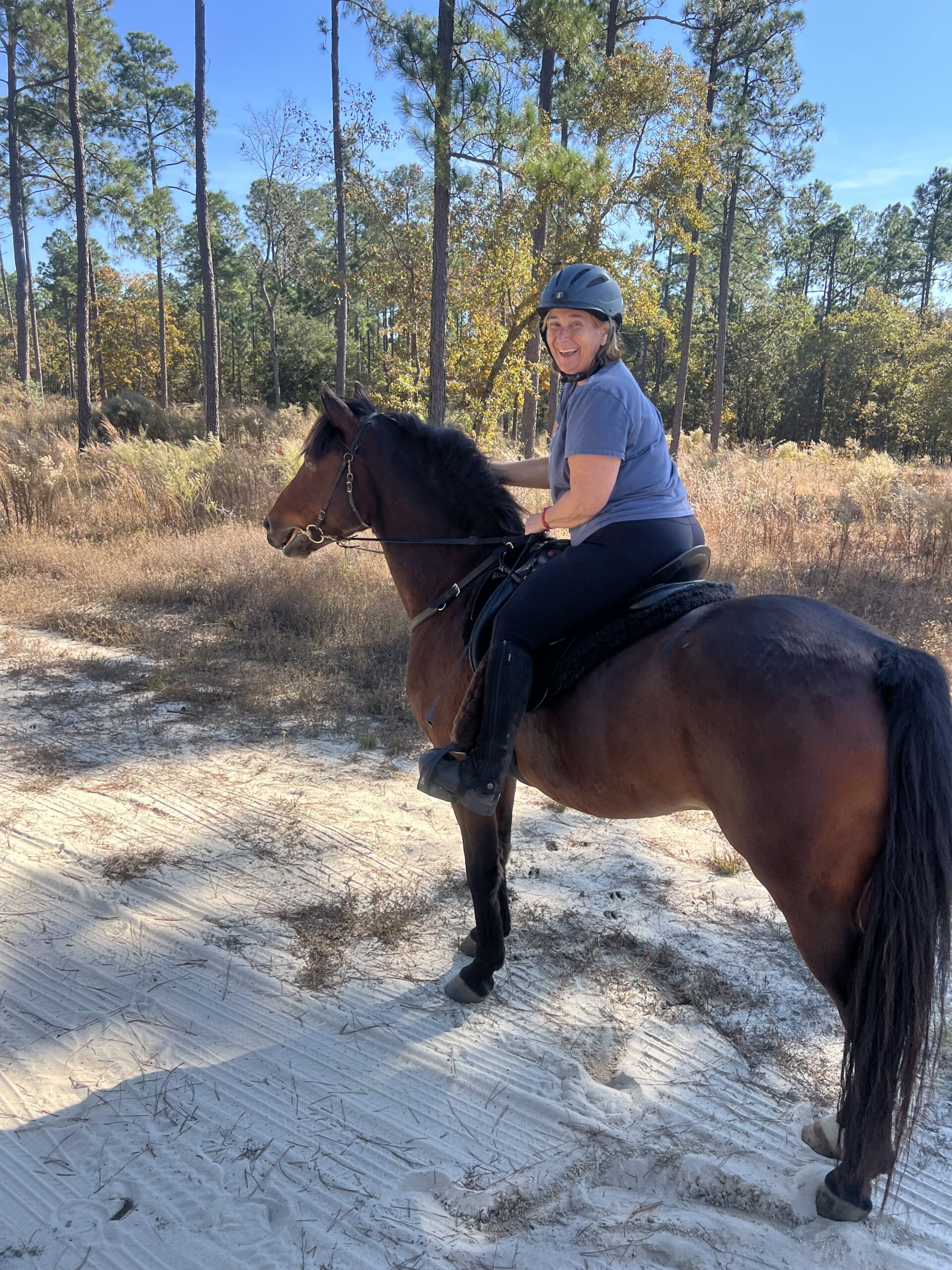
Driveway trot sets, and Mom still on top. Success!
This is the nature of riding green horses. In some cases, we lower our expectations to match their training (or the gaps in it, real or imagined), or we lighten our seats and lean forward to avoid having them be burdened by carrying us. While these accommodations can certainly be a part of the process in a moment, they should be balanced with asking more, incrementally, allowing for the time it takes to be better able to answer the questions, both physically and mentally.
It is, to me, what makes bringing along a green horse so phenomenally rewarding.
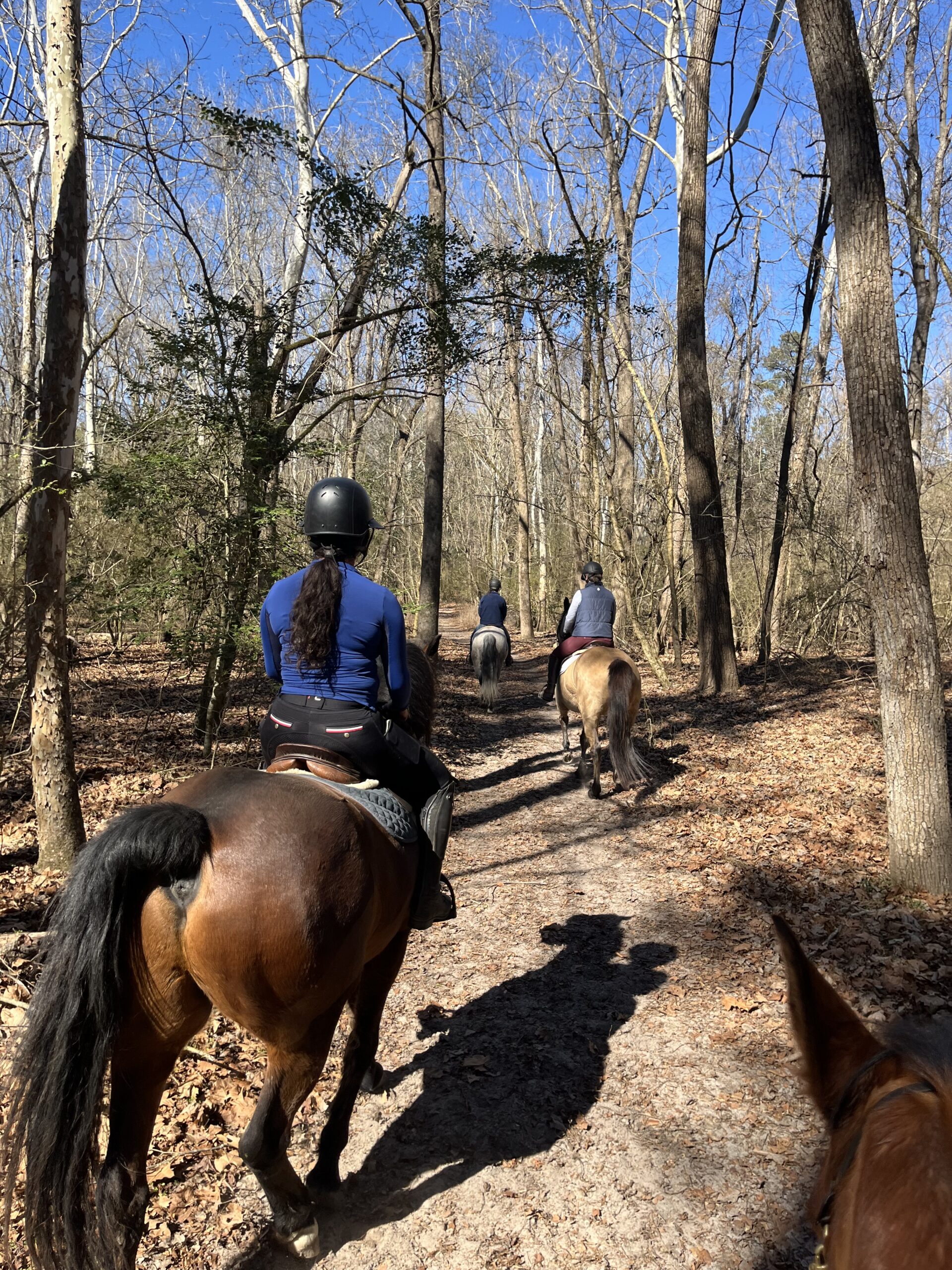
On this day, riding in a group of six, I opted to have Elise ride Atticus, galloper of race horses, such as she is. Atticus was calm as a cucumber. Dunkin wanted to know if we top-tenned. (We did not.)
Rushing, getting out over his skis (something most of us have felt on a horse), being corrected to a more moderate pace, then getting quick, then slowing down and quitting a bit, being urged to try again, then learning to stay in that ‘sweet spot.” For a few moments, then a few seconds, then more and more reliably. Over varied terrain. Without being asked with every stride. Endurance horse self-carriage if you will. A sweet spot where he is within his element to go down the trail softly and efficiently, calmly, without interference from his rider, or just the tiniest of moments of support. A squeezing of fingers on the rein, a supporting leg to say ‘stay straight’ or a “good boy!” murmured as he opts to soften rather than tense up.
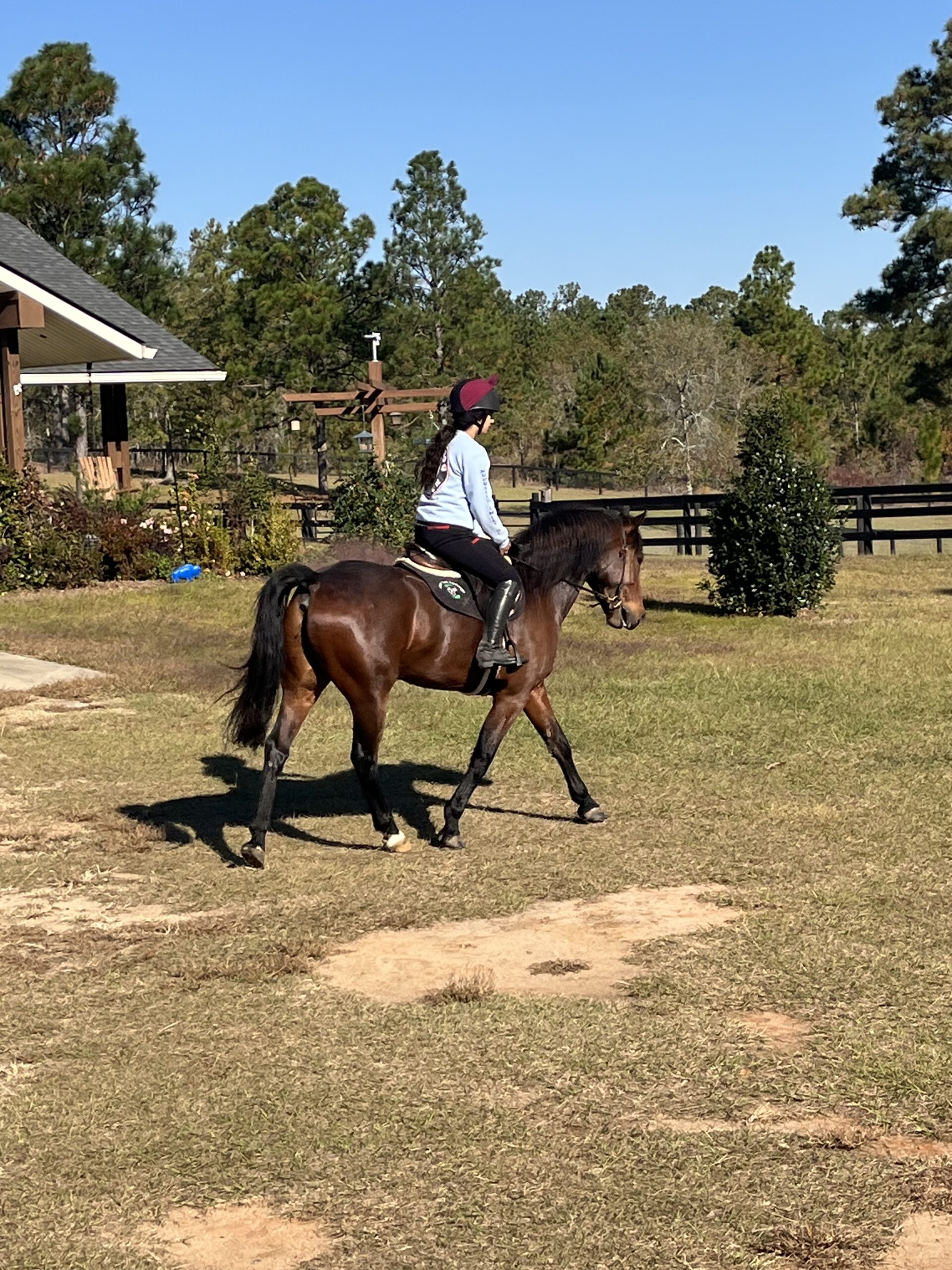
Have I mentioned yet how much I love Elise?
Stretching the Rubber Band
Atticus’ walk is very big, and he’s accustomed to walking ahead (or sometimes away from) his companions out on trail. I was pleased to join my friend Kathy and her mare Maddie for a stroll at Three Runs one day early on. It was Atticus’ first trip without Dunkin, and Atticus was a bit distressed to find that Maddie’s walk was just a tiny bit bigger than his. This left him figuring out whether to tense up and get quick (nice try, wrong answer) or lower his head, loosen his topline and relax into an even bigger walk so he could stay close to his new girlfriend.
It was 90 minutes of him figuring that out, me encouraging the right answers but also letting him learn a bit through his own ‘trial and error.’ There’s no question that both the horse and rider are more comfortable when a horse is moving softly over his topline, reaching over his back and articulating his joints within a safe range of motion, striking the ground as softly as possible. In dressage we tend to ‘micro-manage’ that a bit – and that is not meant as a criticism, just as a contrast – where in hacking out or going long miles down the trail, we tend to set the horse up, let go, ask them to figure it out, stay out of the way. Rinse, repeat.
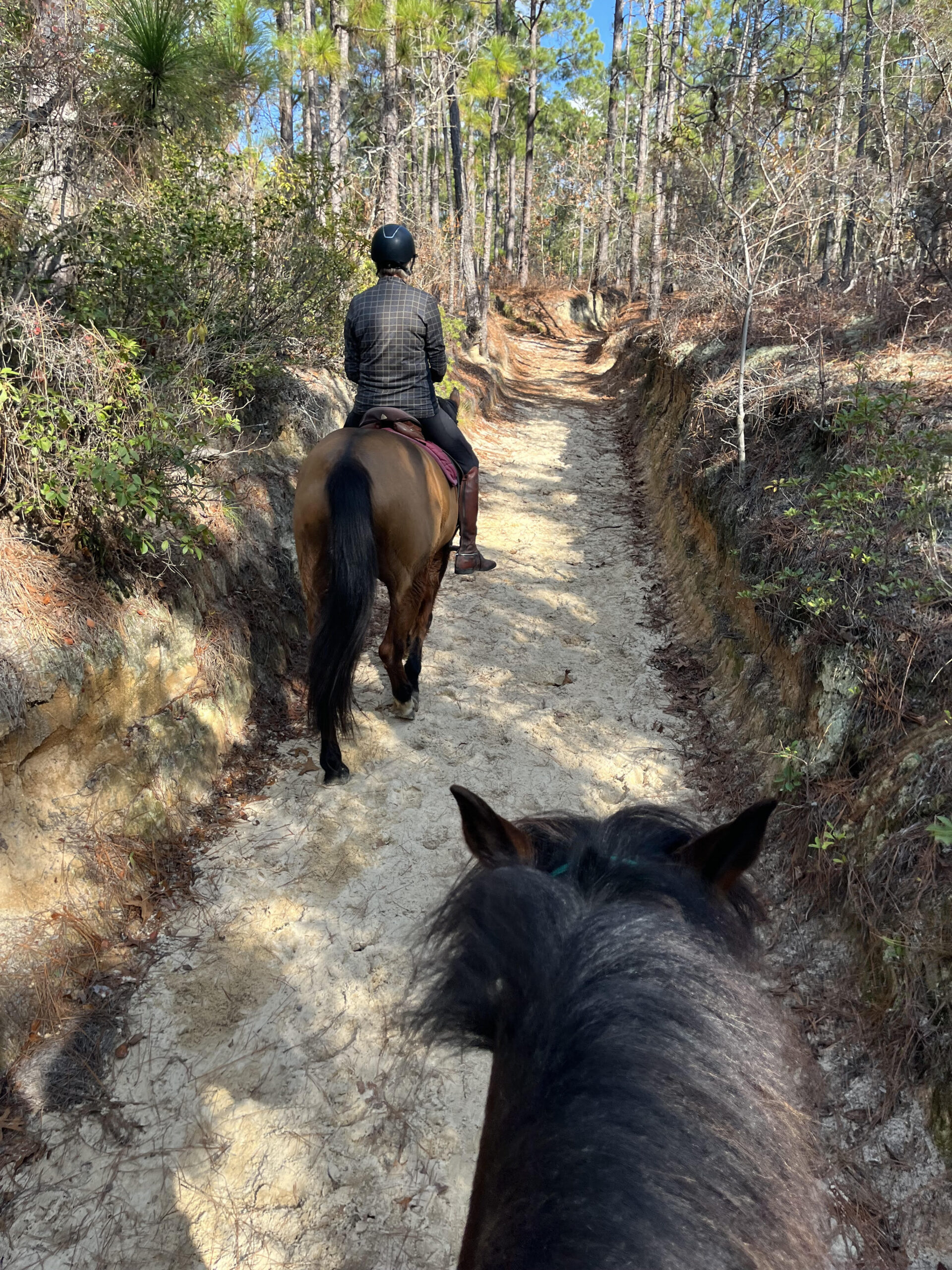
Atticus with his girlfriend, Maddie. Pretty close to keeping up when we met her for a second date at the Woods. (He has an extraordinary amount of hair, no?)
By the end of the ride, Atticus had figured it out, was able to walk right along with Maddie while stretching and chewing. I’m quite sure he was a bit exhausted, both mentally and physically. We’d taken a lot of pennies out of the jar that day. And at the end, replaced most of them.
I remember, many years ago, riding in a dressage clinic with Henk Van Bergen, just 10 days after Ned and I had completed the Biltmore 100. Ned and I had a few disagreements about submission and the MPH of a working trot as we warmed up, and Henk laughed, surprised that I was surprised. “What? You should allow him to make so many decisions when going down the trail for 100 miles, then you are frustrated when you want to be in charge and he’s not so happy?” (Ned did eventually dance, but I remember that lesson well. It is a dance after all, and who is leading can change from moment to moment.)
Biomechanics and the Fine Art of Dabbling
Atticus is, I would say, garden-variety crooked. He was stronger on one trot diagonal than the other, preferred (still prefers) one canter lead, stiffer left, hollow right. Within weeks of climbing and descending hills, I was pleased that the trot diagonals felt nearly identical.
But it is a process. We ask him to do circle work in the yard, and it is hard for him. And Atticus is not always a fan of hard work. I think, like me, he prefers to do things he’s good at. When he gets a little resistant, off we go for a trot or canter up the driveway, then ask a little more of him, ending on a good note, always.
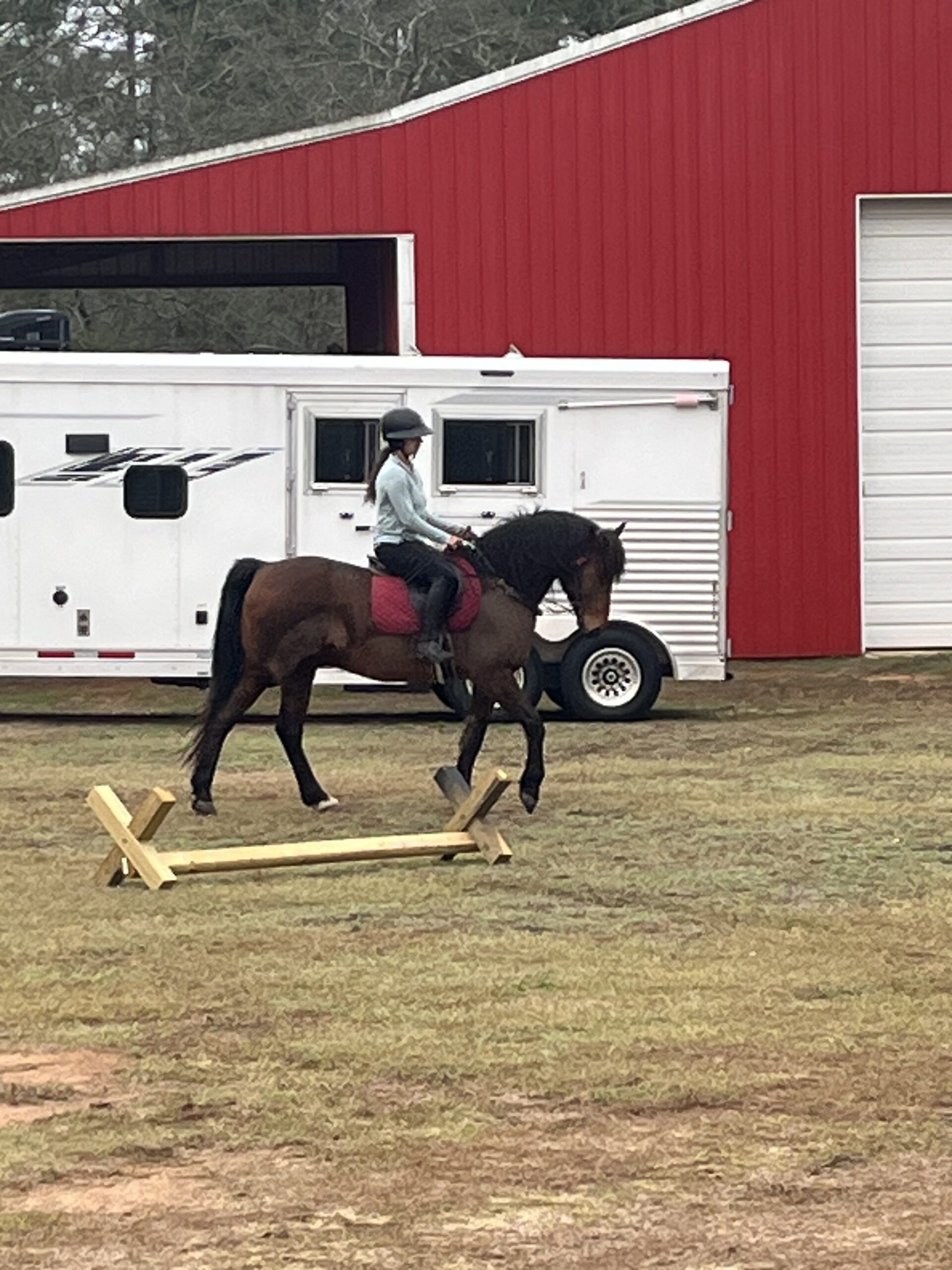
It’s coming along.
Most of all, we dabble.
If he’s tense and looky being ridden out alone, we practice leg yields up and down the driveway, balancing inside leg into outside rein, asking him to step over more from behind or through his shoulders, playing with the moment of switching from yield right to yield left. (He forgets how vicious the squirrels are, distracted as he is by the requests from me.)
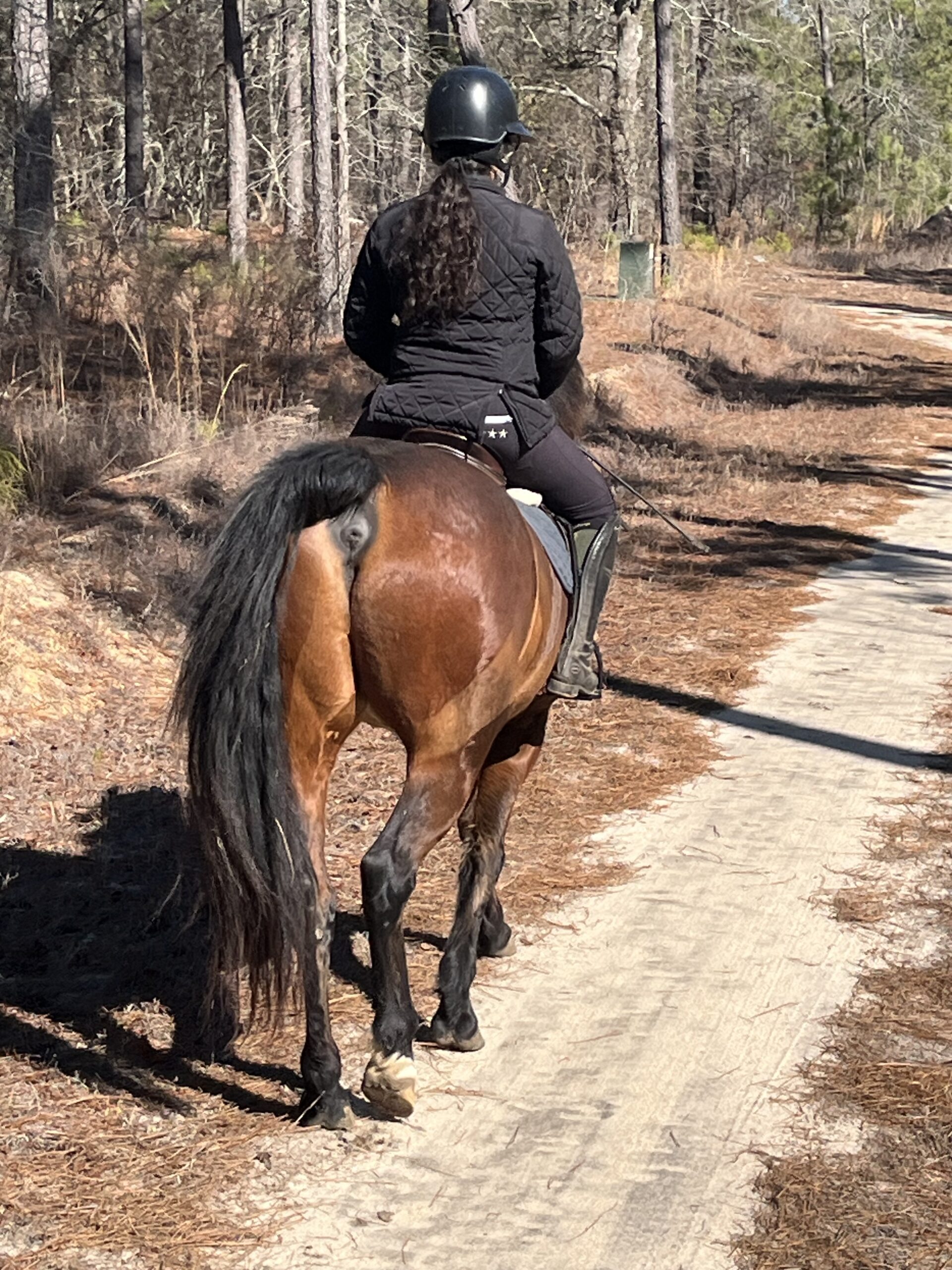
I attended a Working Equitation lesson at Kathy’s one Sunday afternoon. I knew it would be good for Atticus to be faced with obstacles. He was, as I expected, largely unflappable, and also, given the opportunity, happy to push me out of the way to suggest that he make the decisions. In many ways, it felt like being around a toddler learning to tie his shoes, when you are just wanting to get the task done. “No! Me do it!” In the end, we’d get his shoes tied at each obstacle. But there were a couple of tussles about who would lead as we danced.
Tom built us a set of cavaletti (basically raised ground poles to step over, if you’re unfamiliar). We toodle over these, or mostly Elise does. Atticus seems wildly unconcerned about picking his feet up enough to avoid hitting them. We giggle. I guess he needs more work over cavaletti. (We are grateful he seems motivated to pick up his feet for natural obstacles like tree roots. He seems to regard the cavaletti as a bit silly, or perhaps beneath his calling.)
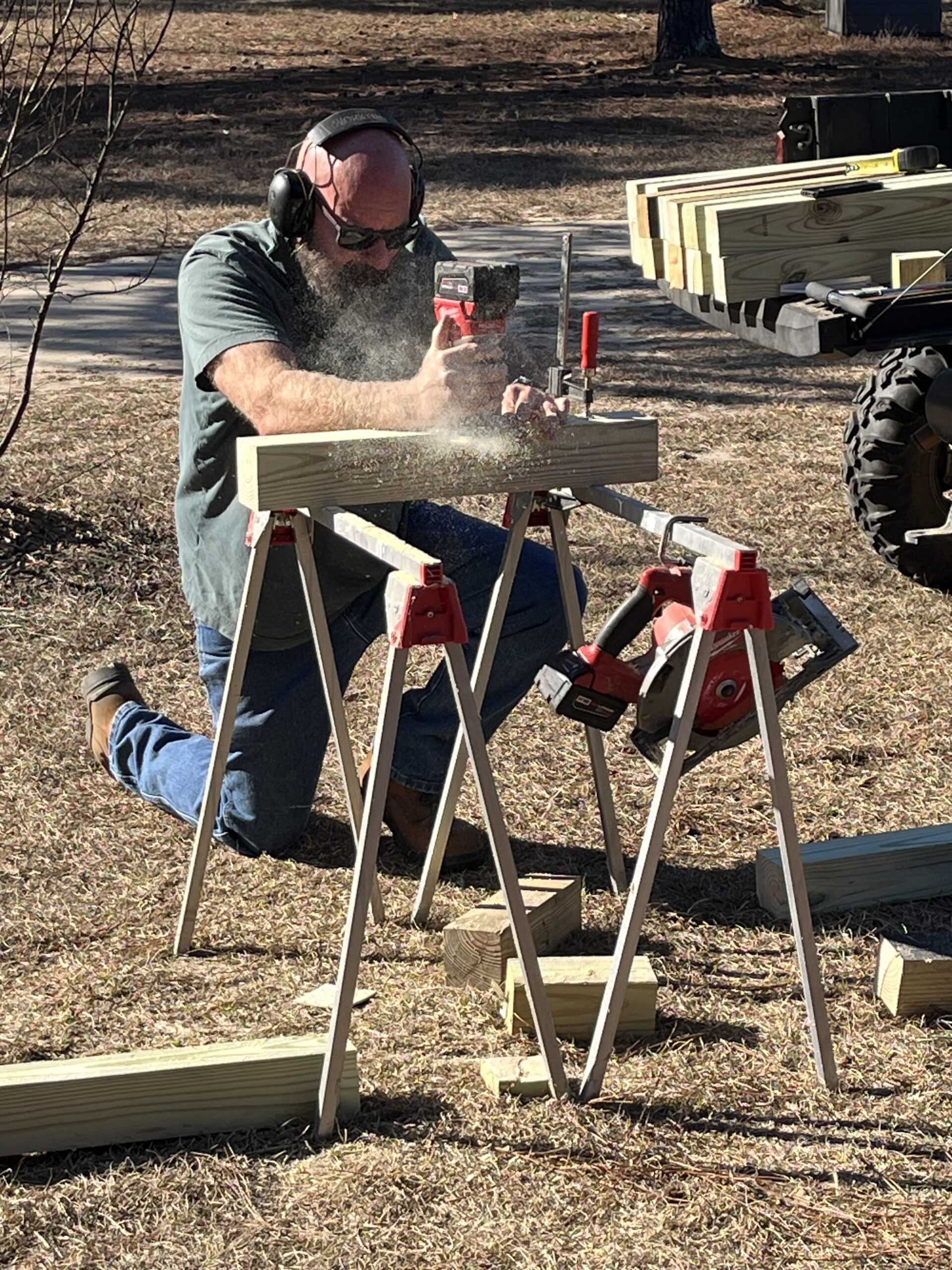
If Tom had known how unimpressed Atticus would be with his cavaletti, he might not have constructed them with such good-guy enthusiasm.
I finally had my first dressage lesson on Atticus. Just a week ago.
It was at a facility with a covered arena I covet, but is well outside our tax bracket. Perfect footing, and mirrors the entire length of the short side. I apologized to Lynn for our biothane bridle, our distance riding peacock stirrups. She didn’t care about these superficial things, thankfully.
We got pointers on making Atticus “squishier.” An adjective I love. How to add layers to the foundation we’d been working on, where to expect and ask more, when and how to give, to make invitations that Atticus simply could not resist accepting. How to mind my own riding and foibles and faults.
I could hear Walter Zettl, may he RIP, saying in a lesson so many years ago, on repeat –
“The secret is not in the take, but in the give.”
Like any good primate, I am handsy, and not quick enough to give. My right hand, the dominant one, has a life of its own, possessed by some demon that suggests it knuckle over, or cross over the midline. I’ve googled “right hand exorcism” but no solution appears other than being mindful and just a wee bit self-disciplined. (Oh good, my specialties! <written in the sarcastic font>)
“Feel your horse. How does he make that bend? Is he rigid? Is he tight? Is he mellow? Is he lazy? There’s a lot of things going on in there if you’ll listen to him. We don’t notice near enough of the good things he does and while he’s doing those good things, we just take them for granted. We do way too much physically.” (Ray Hunt)
We cantered, both ways, not pretty but also not awful. We are going to have to ride, really actively ride the canter until Atticus learns it’s one of the gears he’s expected to use. (Former driving horse and all.) Lynn said, confirming what Elise and I suspected, that his canter will be our favorite gait to ride once we get it all figured it out.
She declared Atticus could be reading for a Training Level test in three to six months. I shook my head and laughed. As if.
But never say never.
[Next up, Part 5, Preparing for our First Ride.]